Until next time…
Photos from the exhibition in Phnom Penh.
Click on arrow on the right to see the next photo.
Two months to the day since I rolled those last kilometers into Phnom Penh, I have had quite some time to digest the incredible experiences of my epic cycling adventure. It’s hard to put such a journey into words as each and every day was so different from the previous one, the terrain, the weather, the people, often the food. It’s hard to summarise such a journey, in fact, I don’t think I need to! I think what will stay with me the longest is just how incredibly similar we humans are, everywhere, what we don’t know about each other we are scared of, this is the cause of so much misunderstanding. Traveling gives us the perfect opportunity to know what we don’t have to be scared of. I’m often asked how it felt to arrive, to reach my goal. As I cycled those narrow and busy roads through the buffalo lined, rice paddies and on to my destination I guess I felt mostly sadness that the adventure was over, no massive sense of achievement, just the end of the road….till next time at least.
I hope that you have been able to share at least a portion of the joy that this trip has brought me, certainly the comments I have received from so many have helped keep me going. I have loved hearing from you all! Let the next next adventures begin….
Thanks to your generous donations, around NZ$10,000 was raised. It’s not too late to DONATE to The Cambodia Trust
Supporting A Great Cause: The Cambodia Trust
Click on arrow on the right to see the next photo. All photos care of Cambodia Trust, all rights reserved.
It has been my intention to support a charity with this trip since the beginning, it has taken me this long, and extensive help from my friend in Phenom Penh to find the Cambodia Trust. This organisation fits my philosophies and motivations perfectly and I look forward to seeing how I can be involved with some of their projects into the future. Their work is encouraging because they not only give but also train locals which empowers them to continue their amazing work well into the future, with or without the support of the organisation. Their work coincides perfectly with my own in the medical field and my long-term interest in prosthetics and support for the disabled.
My trip has so far taken me from Budapest along the Danube to Serbia and on to Bulgaria. I then pedaled east through Greece to Turkey and on to Iran. I then took a short flight over Pakistan to India where I have just completed 2 months of tough cycling in the high Himalayas. I’m now 10 kg lighter and fit as a trout. Ready to move on to central China and then on to Vietnam, Laos and finally Cambodia. I have so far covered 6,000 km and plan to cycle 4,000 more before reaching Phenom Pen.
My trip will cover a total of at least 10,000 km through 11 countries and at least 100,000 m of mountain climbing. I have passed through areas speaking 15 languages and 8 religions. I will take more than 10,000 photographs and shake hands with an estimated 2000 people. I will drink more than 500 litres of water and just 6 inner tubes. My pedals will rotate more than 10 million times and I will replace my brake pads at least 3 times. Burning about 5,000 calories each day, I will churn through a whopping 1,250,000 calories during the 7 months on the road.
So, with all that in mind, please read more about Cambodia Trust and donate what you can, however big or small your donation is.
Thank you so much for your generous support!
Swapping my bike for my FEET (and a horse or two)
Click on arrow on the right to see the next photo.
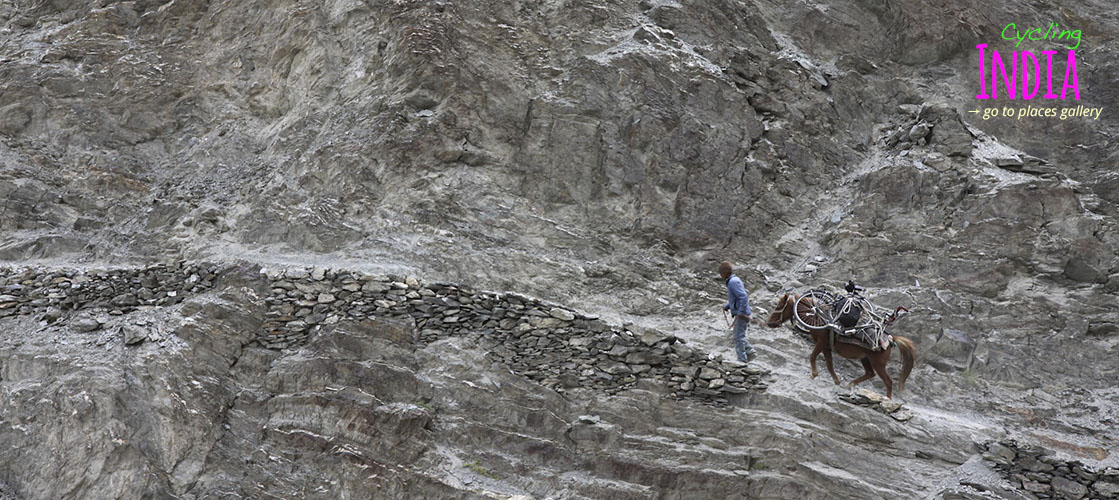
At each step of the horse, I have to close my eyes as my bike passes millimeters from large rocks, after just 500 m of the 130 km we have to walk, it has already grated the rock twice. The only solution is to walk far enough ahead so as not to hear it. This is the only way to get back out of the beautiful Zanskar Valley without back-tracking. I must get my bike and gear up and over the road less (though construction is well under way) 5000 m Shingu La pass back to the Manali – Leh Highway.
As the risk of snow closing the passes increases everyday, we opt to bus the first 220 km to Kashmir where we start cycling down the Sulu Valley. At each village we are greeted by swarms of children from every direction screaming “Happy, one pen”. Since we don’t carry any pens (and if we did, we would need thousands), we can only say “Salaam” or “Hello” in reply and continue on our way. This does not satisfy them all and some choose to show it by throwing large rocks at us. For me this is a huge insult which leaves me feeling very sad and unsure of why I’m here. I travel to see new cultures and get new perspectives, and sheltering from pelting stones is not one that makes me any wiser. Instead it makes me realise how detrimental tourism can be in some situations, one tourist has given each child they have seen a pen once, not every child has gotten one which has made caused problems amongst themselves, they then assume that any westerner that passes has something for them, in Nepal it was pens, balloons and sweets, in Tibet it was money and so on. If we don’t give them anything, they feel left out, some retaliating by throwing stones. It’s makes me quite sad.
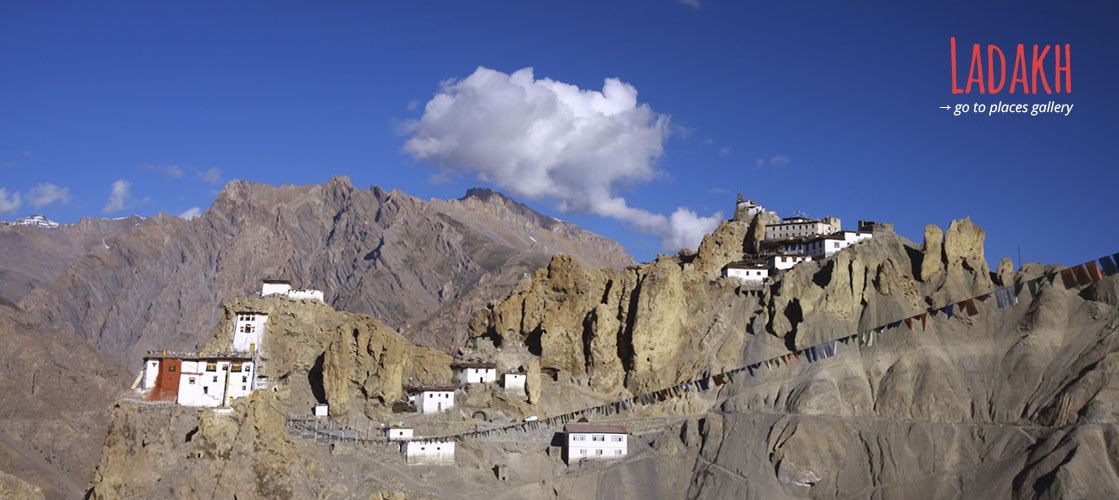
Rounding the corner, the religion changes, the greetings return to the Ladakhi “Julley” and the mobbing stops, one child in ten still asks for a pen or sweet but shows no aggression when we don’t oblige. We are left free to enjoy the most spectacular hanging glaciers which reach down to the road. Open valleys and small ponds with snowy peaks beyond make splendid backdrops for wandering Sheppard’s heading their sheep and small Tibetan villages with their extensive supplies of yak dung in piles on the roof in preparation for the brutally cold and isolated 5 months of winter. A monastery sights majestically atop a small hill in the middle of the breathtaking valley. We are kindly invited to food by a group of Swiss cyclists on an organised tour in the other direction, their guide provides every detail we require in order to follow through on our plans to walk the final section.
Feeling the time pressure and making incredibly slow progress because of the terrible road, we take a bus for the last 40 of 230 km to Padum to purchase supplies for our trek. With an extra 15 kg of food and fuel on the bike we ride the 25 km to the village to find horsemen. It’s not long before we have paid far more than we should and are ready to leave at 8 am the following morning.
Ready in plenty of time, but no sign of the horseman or horses. We wait, “Indian time” I’m told by a local.
Finally he arrives with Ompo and Marpo (gray and brown in Ladakhi language). The bags are loaded and we’re off cycling the last km’s to the road end. The bikes are most awkwardly loaded and we continue on foot.
Our horseman invites us to his home in a distant village, accessible only by foot. His uncle (the only member of the family who speaks any English) tells me how each log for the house roofs is dragged for 3 days on the frozen river in winter, each step hoping that the ice won’t break. It is harvesting time and every man, women and child is occupied in the fields bringing in barley, potatoes, peas and some vegetables for the long winter months during which the inter-village cricket takes places on a snow cleared area of land nearby. Dinner is cooked on the yak dung fired stove placed centrally in the low room, the dirt floor is sprinkled with water to keep the dust down. An unresponsive child stairs blankly at us, wrapped in a filthy duvet and hat. An old military Jerrycan lies on it’s side in front of the fire, one side peeled back to catch those glowing embers as the paper thing metal door is opened to refuel the fire. A large kettle bubbles over an open hole in the top of the stove, its’ bottom charred and blackened by years of flames licking over its’ surface. Milk tea boils on a pressurised kerosene stove nearby, filling the room with the insidious smell of kerosene which is the trademark of India. Wisps of gray smoke escape from small openings in the stove top creating the an atmosphere somewhat like a 1930′s smoking den, or at least as I would imagine it. Everyone coughing in unison. The roof is made of trunks, branches and twigs arranged in that order, each supporting the layer above. It is all singed black by years of rising smoke. Everything else is made of mud, small glass windows sit haphazardly placed in 2 rows on two walls. A little daylight glimmers through the layers of caked dirt, lighting up the room just enough to see to the other side.
Food is served in stages, first milk tea followed by yak yogurt with sugar and tsampa (roasted barley flower) as a warm up. Butter tea is then poured in bottomless cups after the soup-like broth of tea, salt, yak butter, yak milk and water is churned in a special churn found in every home. After refusing the 5th cup, production of the momos begins. A type of dumpling made from wheat flour and filled with, in this case, potatoes, onions and tomato and steamed. Delicious.
Next door two small carpets are laid out for us to sleep on. The 1.2 m high door, dust and total darkness makes it feel like the huts we used to build from hay bails as children. A small transistor radio hangs from a nail above the window, a picture of a baby is also impaled on the same nail. Animal bones with wisps of dried flesh are resting on the top of the post which supports the ceiling, a small chimney sized hole opens to the air above, I notice in the daylight that it is covered by a thick layer of cut grass. On one wall two thick yak wool robes hang with matching scarves on nails banged into the mud wall. A wood saw hangs on another wall while several adzes for shaping wood balance precariously on the door frame.
Eyes fully open, I admire the total darkness. The door suddenly swings open and our horseman comes in, using his 3 words of English he says “horseman sleep here”. He places the blankets from the horses saddle next to me and goes to sleep completely clothed. The wind makes a low noise from the missing window pane. Sleep comes easily.
I’m woken by the sound of a baby yak crying outside. Breakfast is chapatti with curd (yogurt), sugar and tsampa before we set off for the bottom of the pass in low cloud. The seemingly endless valley is crowed by a needle of rock reaching into the sky, a holy mountain under which we spend the night with several other groups of trekkers going both up and down the valley. There is some anticipation in the air as we must face the pass in the morning. We can see large amounts of snow but are told the way is clear because of the dozens of horsemen who pass daily.
I wake as the sun puts a golden icing on the peaks of the mountains, trying to keep warm is my top priority as I pack my things as load the horses. We move off across the valley where we quickly climb into the snow, switchbacks take us higher and colder, past several small glaciers and on to the pass adorned as usual with hundreds of colourful prayer flags. The wind rips through every layer of clothing, we can only stay some minutes before descending into the valley past a partially frozen lake. It is the home stretch as we descend 1800 m back to the road below to continue by road to Manali to reaquant ourselves with the wonders of a shower and good food.
Swapping a bike for a BIKE
Click on arrow on the right to see the next photo.
The front wheel skids to the left causing the motorbike to tip onto its’ side. I don’t have time to put my feet down as the full weight of the bike pins us to the planks of the bridge. I pull free while the back wheel is still spinning. No one is seriously injured, just a few scraps and bruises. We lift the bike back up to find the starter and air filter cover laying on the ground. In no time and with the help of a large stone, they are again attached to the bike. One kick and it roars back into life, only to die again 2 km later. Luck is with us as we are just outside a very run down guesthouse where we, after doing some major repairs on the bike, are forced to sleep the night snuggled up with some friendly bed bugs and curious flies.
My eyes become heavy to the sound of screaming babies, passing trucks and loud voices, the broken pane of glass providing little protection from the din outside. My thoughts wander back to the morning when we embarked on this adventure in Leh.
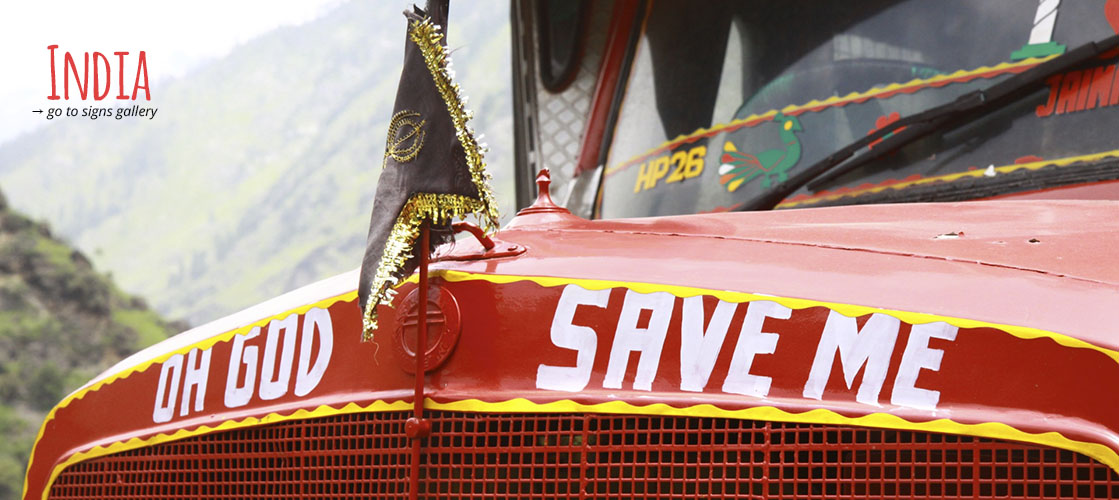
The roar of the Indian made 350 cc Royal Enfield filled the air. Its’ tremendous weight requiring two people to pull it onto its’ stand as we park it outside our current favourite breakfast spot. Swapping my bike for this poorly designed machine with a cool factor which can’t be beaten in India. All walks of life straddle these metal beasts to cruise the wild roads of India in search of themselves (or, in many cases, others), and always to the most distinctive vroom which only an Enfield can make. At a rate of about 8 euros per day, you can’t complain about much. No brake lights or indicators is no reason not to ride, so we’re off, us and the open road.
It’s not long before back brake locks up on one of the bikes, sending it skidding 30 m down the road. Two passing locals on a scooter lend a hand to get us back on the road. Soon after one bike skids on loose gravel and the other falls over while crossing a bridge. By now one is missing a foot pedal and the other has lost the starter lever and air filter cover, nothing that can stop us. But just a few k’s later one of the bikes stops and refuses to start, petrol drips continuously from the engine. Locals are summoned but fail to solve the problem, luck has it that we are in front of a very run down guest house where we are forced to stay the night. Working in the dark I remove the carburetor to try to solve the engine problems, I clean it and replace it, still no luck, the engine is flooded. Waiting and hoping for the morning for it to have dried out is the only option.
I’m woken early by passing trucks, one after the other from 4 or 5 am. I drag myself up and head straight for the bike, with no key required (that surely broke off years ago), I kick the start (replaced with the help of a large rock) and Vvvvvroooooooom, it roars into life, yes! We’re back in action. Not giving up easily we leave as quickly as possible, 3 out of 4 of us are left suffering from stomach problems from the dinner the night before, heading further to Lamayuru Monastery where we should have slept the night.
The road begs the nerves to remain calm as dozens of hairy switchbacks take us up up up to a cliff hugging road where each blind corner is made more exciting by the oncoming army convoys, with only the horn (working on just one bike) to warn them of your approach. With the rain starting we finally arrive to have a quick look at the monastery before heading back to Leh to re-acquaint myself with my far more reliable mode of transport. A two day adventure with more mishaps than 3.5 months on the bike. Lucky it wasn’t for a week!
Delighting in the Dalai Lhama
Click on arrow on the right to see the next photo.
The sound chanting fills the air as tens of thousands of locals crowd around crowd loudspeakers to listen to the prayers and teachings of the Dalai Lhama. After rolling the 7 km downhill to the venue, it was as if I was back in Delhi, soldiers with whistles guided traffic as car loads of colourful and enthusiastic locals arrive in droves to the event. Buses and trucks carry people from far and wide, many having travelled through the night in order to get a glimpse of their hero.
Bamboozeling Beauty
Click on arrow on the right to see the next photo.
White waters cascade over huge boulders in a tremendous torrent towards the sea some thousands of kilometers away. The national highway which runs alongside resembles a river as water rushes across it leaving the road covered in sharp or round boulders and many small river crossings. The bigger rivers are bridged by many temporary Baily bridges which have seen better days, large gaps often have formed as heavily laden trucks noisily lumber over the creaking and bending structure. Great glaciers reach for the river like giant longs longing for a sip of fresh water. Boulders litter the surrounds as if pebbles in a giants sandcastle, and we, the minute cyclists roll steadily towards the next highway. The infamous Manali – Leh Highway where the high mountain passes quickly sort the men from the boys and entertain only those tough (or crazy) enough to negotiate the spectacular terrain and monumental passes. This gateway to Ladakh has earned a reputation as one of the most spectacular rides in the world and thus attracts an equally spectacular range of enthusiastic cyclists to it’s windy way during the 3 month snow free season.
During the 6 nights on the road there was no shortage of characters to keep us in good company.
“Well f*#! Me, is this really it, f%&!, f#*!, f#%*!” were her only thoughts as she cascaded over the cliff in Bolivia while mountain biking on the worlds most dangerous road. Sipping chi outside a makeshift village made from stones and plastic sheeting we are entertained by a pair of Irish cyclists full of hair raising stories from the road. As a strong tailwind pushes me towards the next tent village, I come across a bike on the side of the road, it’s owner struggles over another bike on the bank above. A scruffy looking guy in a sweatshirt explains that his tire is flat and he has spent the day trying to fix it with little success. 19,000 km after leaving Switzerland, the other cyclist tries to lend a hand. Finally we manage to get him back up and running with a new tube. We all cycle together to the next village to camp the night. The young English guy has managed to make it this far on a poorly adjusted bike which he hired in Manali while carrying a 25 kg backpack on his back. Stories quickly come out about a Japanese guy cycling the highway on a single speed Indian bike he purchased for just $24. Then there is ‘dogman’ who takes photos of dogs for a living. He is now several days behind because he doesn’t like the rain so was waiting out a storm down the valley.
As we progress it becomes a game of tag has me travel towards Leh, the two English lads who turned up in the village pass us on a truck after discovering there is nothing in one of the valleys where they had planned to stay while the Japanese fellow labours endlessly to push his bike up the huge passes. There is no sign of the young fellow until well after dark when he turns up looking very dirty after pushing the bike up more than 30 km of hills before riding along cliff edges in the dark without a torch for the remaining kilometers.
And so it continues, three burly Czech guys in shiny Lycra arrive at the final pass the same time as we do, they have cycled the 10 day trip in just 5 as if they are going for some sort of record in a whirlwind tour of northern India.
The mountains continue to amaze with there diverse colours and photogenic landscapes. Soon the valley widens and we arrive, after a final 5 km uphill, in Leh to an official welcome from the Dalai Lhama who waves to us from his vehicle as we pass through the entrance to the city. A perfect welcome!
Monsoon to Mountain Madness
Click on arrow on the right to see the next photo.
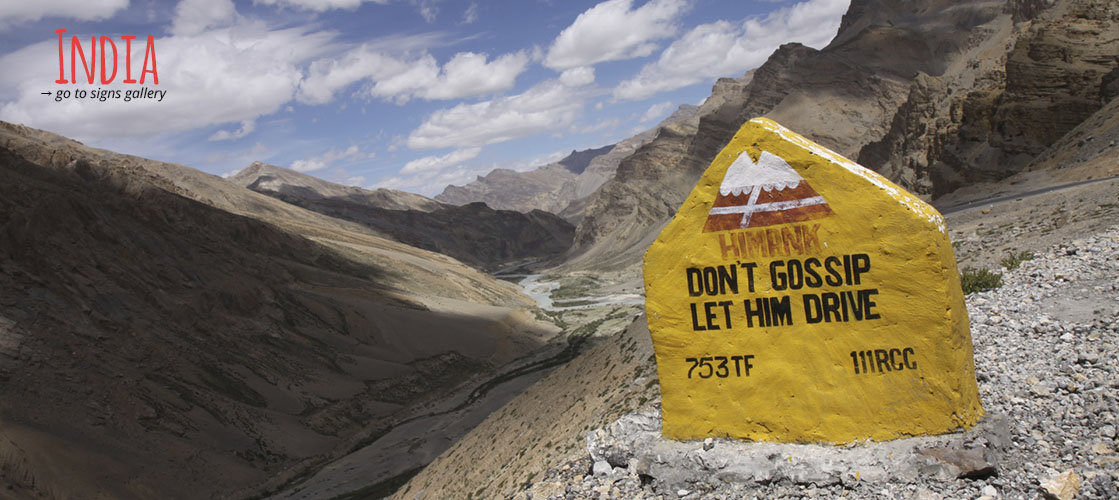
Sometimes it is hard to believe that we are in India, most everything around appears like in Tibet. The villages look like Tibet with white, flat roofed mud brick houses decorated with bright colours interspersed with Tibetan monasteries and ever rotating prayer wheels. There is a much calmer feeling in the air as people go about their business growing barley, sweet pees and potatoes in terraced fields on any land that can be provided with water from the many pristine creeks and rivers which run from the remaining snowy areas high in the mountains. Picturesque monasteries attract many western Buddhists to spend extended periods of time here, experiencing a simple life of chanting, eating, sleeping and, well, playing cricket or volleyball. The monks lifestyle is incredibly simple and easy for them as they have no duties beyond the occasional ceremony for the local villagers to cleans them of any demons. In one such ceremony all the villagers crowd into a low, dirt floored room light only by two intense beams of light from small holes in the ceiling. The thin high altitude air combined with the smoke of sage being burnt by the lhama makes my very dizzy. Children cause mischief amongst themselves as the next stage of the ceremony is prepared. The lhama then cleanses each person by spitting into an ornate silver teapot of milk with a haunting sound and heavy breathing before pouring a steady white stream onto the face of each man, women and child. The milk is quickly rubbed over the face and taken into the mouth before being spat out onto the floor in front. This process takes quite some time, once complete each person receives is touched on the head by the lhama using peacock feathers with the sick being given extra attention. Finally (for the kids especially) the ceremony is over and everyone flocks out into the extreme high altitude sunlight to continue their daily lives.
We cycle on to the next monastery where I spend the night overlooking another quaint village which interrupts the dry landscape with vivid green fields and colourful white houses. The stars seem close enough to touch as shooting stars cruise through the night on a silent journey to nowhere.
Gravel turns to asphalt and asphalt to stones creating a patchwork of roads as unpredictable as the Indians themselves. The road crosses plateaus of peas, potatoes and barley as it weaves its’ way towards the pass, many steel bridges straddle the rivers and the mountains continue ever higher towards the sky. Glaciers hang precariously from the high valleys, just threatening to disappear as the temperature increases year by year. The road climbs ever higher, the air thins and my breathing becomes laboured and fast, my pedals turn slowly and the wheels bump and grind over sharp rocks, as I pass the last stream and reach the top of the pass I feel somewhat elated as the speedometer clicks over to 5000 km exactly at that point and my notes tell me I have been on the road for 3 months that day. Where will the next 3 months and 5000 km take me?
In the Belly of Delhi
Click on arrow on the right to see the next photo.
Large droplets cascade to the ground, each joining the next to create rivulets, streams and rivers which quickly fill the gutters, alleyways and streets. I gather my courage (and rain jacket) and run in the rising water towards the bus which is waiting 100 m away, on arrival everything which was left exposed is totally soaked as water buckets from the sky. Water laps around my ankles as I frantically try to squeeze the 3 bikes into the cramped luggage compartment on the bus. As we pull away, the rain continues and the water rises, motorbikes are the first victims, scattered on the sides of the roads as their owners try to find home on foot. Cars are next as water reaches the top of their wheels slowing traffic to a painful crawl. My eyes become heavy despite the mayhem, I drift off only to be woken by the constant left, right, left motion of the bus, I smile knowing that we have finally reached the base of the mighty Himalayas, rising 8000 m above. The 40 degree humidity of Delhi feels like a dream as lofty clouds shroud beautiful dense forests and the cool air is filled with the fresh smell of rain. We find suitable accommodation and head into town to plan what will certainly be some of the most spectacular cycling of the trip.